

Your Complete Gold Guide: Understanding Value, History, and Market Opportunities
Gold has captivated humanity for millennia, serving as a store of value, medium of exchange, and symbol of wealth across civilizations. In today’s complex financial landscape, gold continues to play a crucial role in investment portfolios, offering unique benefits including inflation protection, portfolio diversification, and a hedge against economic uncertainty. Whether you’re a seasoned investor or just beginning your financial journey, understanding gold’s role in modern investing is essential for making informed decisions about this precious metal.
This precious metal’s enduring appeal stems from its intrinsic properties: it doesn’t corrode, tarnish, or decay, making it a reliable store of value across centuries. Unlike fiat currencies that can be printed at will by governments, gold’s supply is limited by mining capabilities and geological constraints, contributing to its status as a hedge against currency devaluation and inflation.
In This Guide
- The Historical Context of Gold – Explore gold’s role throughout human history and its evolution as a monetary standard
- Gold’s Value Over Time – Analyze historical price movements, key trends, and factors driving gold prices
- Understanding Gold Markets – Learn about spot markets, futures, and the global gold trading ecosystem
- Investment Methods and Vehicles – Discover various ways to invest in gold, from physical ownership to financial instruments
- Physical Gold Investment – Understand coins, bars, storage options, and associated costs
- Gold ETFs and Mutual Funds – Explore paper gold investments and their advantages
- Gold Mining Stocks – Learn about investing in companies that produce gold
- Digital and Alternative Gold Investments – Discover modern approaches to gold investing
- Portfolio Integration Strategies – How to incorporate gold into your investment portfolio
- Risks and Considerations – Understand the potential downsides and limitations of gold investing
- Factors That Influence Gold Prices – Understand economic indicators, currency fluctuations, and market dynamics that drive gold values
- Tax Implications of Gold Investments – Navigate the tax considerations for different types of gold investments
- Evaluating Gold Dealers and Storage Providers – Learn how to select reputable providers and avoid common pitfalls
- Current Market Trends and Future Outlook – Explore emerging trends and factors shaping gold’s future
- Getting Started: A Practical Action Plan – Step-by-step guidance for beginning your gold investment journey
- Common Mistakes to Avoid – Learn from frequent investor errors to protect your capital
The Historical Context of Gold

Gold’s relationship with human civilization spans over 4,000 years. Ancient Egyptians used gold for jewelry and religious artifacts as early as 2600 BCE, while the first gold coins appeared in Lydia (modern-day Turkey) around 650 BCE. This marked the beginning of gold’s monetary function, which would dominate global finance for centuries.
The gold standard era, which peaked in the late 19th and early 20th centuries, saw major economies backing their currencies with gold reserves. Under this system, currency values were directly linked to specific amounts of gold, providing stability but limiting monetary policy flexibility. The United States maintained a modified gold standard until 1971, when President Nixon ended the dollar’s convertibility to gold, ushering in the modern era of fiat currencies.
This historical context is crucial for understanding gold’s role today. While no longer a monetary standard, gold retains its status as a “crisis commodity” – an asset that typically performs well during periods of economic uncertainty, geopolitical tension, or currency instability.
Gold’s Value Over Time: Historical Analysis
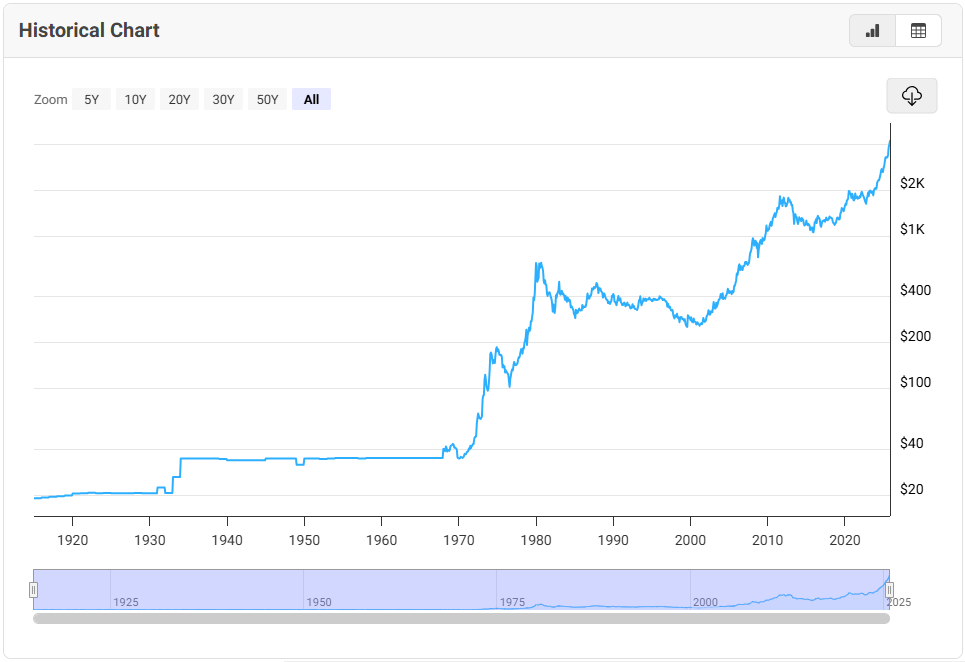
Gold’s price history reveals several distinct periods of performance, each reflecting broader economic and geopolitical conditions. From 1900 to 1971, gold prices remained relatively stable due to government price controls under various gold standard arrangements. The real volatility began after 1971.
Key Historical Periods:
1971-1980: The First Bull Market
Following the end of the Bretton Woods system, gold prices soared from $35 per ounce to over $800 in January 1980. This dramatic rise coincided with high inflation, energy crises, geopolitical tensions including the Iran hostage crisis, and declining confidence in the US dollar. This period established gold’s modern reputation as an inflation hedge.
1980-2001: The Bear Market
Gold experienced a prolonged decline, falling from its 1980 peak to around $300 per ounce by 2001. This bear market coincided with declining inflation, strong economic growth, rising stock markets, and central bank gold sales that increased supply while reducing institutional demand.
2001-2011: The Second Bull Market
Gold prices rose from approximately $300 to over $1,900 per ounce, driven by multiple factors including the dot-com crash, September 11th attacks, wars in Afghanistan and Iraq, the 2008 financial crisis, quantitative easing policies, and concerns about currency debasement and sovereign debt.
2011-2015: Correction Phase
Gold declined from its 2011 peak to around $1,050 in late 2015, as economic recovery reduced safe-haven demand, the US dollar strengthened, and expectations of rising interest rates made non-yielding gold less attractive relative to bonds.
2016-Present: Recovery and New Highs
Gold has generally trended upward, reaching new all-time highs above $2,000 during the COVID-19 pandemic, driven by unprecedented monetary stimulus, low interest rates, currency concerns, and economic uncertainty.
Understanding Gold Markets
Gold trades in multiple interconnected markets worldwide, each serving different purposes and participants. Understanding these markets is essential for any gold investor.
The Spot Market
The spot market represents immediate delivery of physical gold, with prices quoted for standard contracts (typically 100-ounce bars). London is the global center for spot gold trading, with the London Bullion Market Association (LBMA) setting daily benchmarks. Spot prices serve as the foundation for all other gold pricing and are influenced by supply and demand, currency fluctuations, interest rates, and geopolitical events.
Futures Markets
Gold futures contracts, primarily traded on the COMEX division of the New York Mercantile Exchange, allow participants to buy or sell gold at predetermined prices for future delivery. These markets provide price discovery, risk management tools for commercial participants, and leverage opportunities for speculators. Futures prices typically reflect spot prices plus carrying costs (storage, insurance, financing).
Options Markets
Gold options provide the right, but not obligation, to buy (call options) or sell (put options) gold at specific prices. These instruments offer more sophisticated strategies for hedging and speculation, allowing investors to profit from price movements while limiting downside risk.
Investment Methods and Vehicles
Modern investors have numerous ways to gain gold exposure, each with distinct advantages, costs, and risk profiles.
Physical Gold Investment

Gold Coins
Gold coins offer the most direct ownership form, popular options include American Gold Eagles, Canadian Gold Maples, South African Krugerrands, and Austrian Philharmonics. Coins typically carry premiums above spot prices for minting, distribution, and dealer profits. They offer portability, divisibility, and universal recognition but require secure storage and insurance.
Gold Bars
Gold bars, ranging from 1 gram to 400-ounce “Good Delivery” bars, typically offer lower premiums than coins but may have liquidity challenges with larger sizes. Smaller bars (1-10 ounces) provide good balance between premiums and liquidity, while larger bars are more cost-effective for substantial investments.
Storage Considerations
Physical gold storage options include home safes, safety deposit boxes, and professional vaulting services. Home storage offers immediate access but creates security and insurance concerns. Safety deposit boxes provide security but may have access limitations during bank closures. Professional vaulting offers maximum security and insurance but involves ongoing fees.
Gold ETFs and Mutual Funds
Exchange-traded funds (ETFs) have revolutionized gold investing by providing exposure without physical ownership complexities. The SPDR Gold Trust (GLD) and iShares Gold Trust (IAU) are among the largest, holding physical gold and issuing shares representing fractional ownership.
Gold ETFs offer several advantages: easy buying and selling through brokerage accounts, no storage concerns, lower transaction costs than physical gold, and professional management. However, they involve counterparty risk, management fees, and no physical possession rights.
Actively managed gold mutual funds may hold combinations of physical gold, mining stocks, and related securities, offering professional management but typically higher fees than ETFs.
Gold Mining Stocks
Investing in gold mining companies provides leveraged exposure to gold prices – mining stock prices often move more dramatically than gold itself. Major miners like Barrick Gold, Newmont Corporation, and Franco-Nevada offer different risk profiles based on their operational efficiency, geographic diversity, and financial strength.
Mining stocks offer potential advantages including dividends, leverage to gold prices, and growth potential through new discoveries or improved operations. However, they also carry operational risks, management risk, regulatory challenges, environmental concerns, and correlation with broader stock markets that can reduce their hedging effectiveness.
Digital and Alternative Gold Investments

Modern technology has created new gold investment methods. Digital gold platforms allow fractional ownership of allocated gold stored in secure vaults, combining physical ownership benefits with digital convenience. Some platforms offer gold-backed debit cards for spending.
Gold streaming and royalty companies like Franco-Nevada and Royal Gold provide exposure to gold production without operational risks, offering upfront capital to miners in exchange for future production rights at predetermined prices.
Portfolio Integration Strategies
Financial advisors typically recommend 5-10% gold allocation for portfolio diversification, though optimal percentages depend on individual circumstances, risk tolerance, and market conditions. Gold’s low correlation with stocks and bonds can reduce overall portfolio volatility while providing potential returns during market stress.
Rebalancing strategies involve maintaining target allocations through periodic adjustments, selling outperforming assets to buy underperforming ones. This disciplined approach can enhance long-term returns while managing risk.
Risks and Considerations
Gold investing involves several important considerations. Price volatility can be substantial – gold prices have experienced both dramatic rises and significant declines. Unlike dividend-paying stocks or interest-bearing bonds, physical gold produces no income, making it purely dependent on price appreciation.
Storage and insurance costs can erode returns over time, while tax implications vary by investment method – physical gold may face collectibles tax rates, while ETFs might receive more favorable treatment.
Currency risk affects international investors, as gold prices are typically quoted in US dollars. Opportunity cost considerations arise when gold underperforms other investments during economic growth periods.
Factors That Influence Gold Prices
Understanding the key drivers of gold prices is essential for making informed investment decisions. Gold prices respond to a complex interplay of economic, political, and market factors that can create both opportunities and risks for investors.
Economic Indicators
Inflation rates have historically shown a strong correlation with gold prices. When inflation rises, gold often appreciates as investors seek to preserve purchasing power. Real interest rates (nominal rates minus inflation) are particularly important – when real rates are low or negative, gold becomes more attractive since it doesn’t pay interest. Federal Reserve policy decisions, including interest rate changes and quantitative easing programs, can significantly impact gold prices through their effects on the dollar and inflation expectations.
Currency Fluctuations
The US dollar’s strength or weakness directly affects gold prices since gold is priced in dollars globally. A weakening dollar typically supports higher gold prices, making gold less expensive for holders of other currencies. Currency crises or concerns about major currencies can drive investors toward gold as an alternative store of value.
Geopolitical Events
Political instability, wars, terrorist attacks, and trade conflicts often boost gold demand as investors seek safe-haven assets. Brexit, trade wars, and regional conflicts have historically created gold price spikes. Market participants closely monitor global tensions and their potential economic impacts.
Supply and Demand Dynamics
Mine production, recycling rates, central bank purchases or sales, and jewelry demand all influence gold prices. Major gold-producing countries like China, Australia, and Russia affect global supply. Central bank policies regarding gold reserves can create significant price movements, as seen with European central bank sales in the 1990s and emerging market purchases in recent years.
Tax Implications of Gold Investments

Tax treatment varies significantly among different gold investment methods, making this a crucial consideration for investors. Understanding these implications can help optimize after-tax returns and avoid unexpected tax burdens.
Physical Gold Taxation
The IRS classifies physical gold as a collectible, subject to a maximum capital gains tax rate of 28% for long-term holdings (over one year), higher than the typical 15-20% rates for stocks and bonds. Short-term gains are taxed as ordinary income. State taxes may also apply. Investors should maintain detailed purchase records and consider the timing of sales to optimize tax outcomes.
Gold ETF Taxation
Most gold ETFs are structured as grantor trusts, meaning investors are treated as owning the underlying gold directly, subjecting them to collectibles tax rates. However, some ETFs structured as partnerships may provide more favorable tax treatment. The SPDR Gold Trust (GLD) falls under collectibles taxation, while some newer products may offer different structures.
Mining Stock Taxation
Gold mining stocks receive standard capital gains treatment – long-term gains are taxed at preferential rates (0%, 15%, or 20% depending on income level), while dividends may qualify for reduced tax rates. This can make mining stocks more tax-efficient than physical gold or most ETFs, though with different risk profiles.
IRA and 401(k) Considerations
Gold investments in tax-advantaged accounts can defer or eliminate tax consequences. However, only certain gold products qualify for IRAs – typically American Eagle coins, Canadian Maple Leafs, and some bars meeting purity standards. Gold ETFs and mining stocks are generally acceptable in standard retirement accounts without special requirements.
Evaluating Gold Dealers and Storage Providers
Selecting reputable dealers and storage providers is crucial for physical gold investors. Due diligence can prevent costly mistakes and ensure the security of your investment.
Dealer Selection Criteria
Choose dealers with established reputations, transparent pricing, and proper licensing. Look for membership in professional organizations like the Professional Numismatists Guild (PNG) or American Numismatic Association (ANA). Compare premiums across multiple dealers, but be wary of prices significantly below market rates, which may indicate counterfeit products or unreliable service.
Verify dealer credentials through Better Business Bureau ratings, online reviews, and state licensing databases. Reputable dealers should clearly disclose all fees, provide certificates of authenticity, and offer reasonable return policies. Established dealers like APMEX, JM Bullion, and local coin shops with strong reputations are typically safer choices than unknown online sellers.
Storage Options Analysis
Home storage provides immediate access but requires adequate security measures including safes, insurance coverage, and confidentiality. Safety deposit boxes offer bank-level security but may have access limitations and unclear insurance coverage for precious metals. Some banks explicitly exclude precious metals from coverage.
Professional storage facilities, including companies like Brink’s, Delaware Depository, and specialized precious metals vaults, provide maximum security, insurance coverage, and segregated storage options. Fees typically range from 0.5% to 1% annually but include comprehensive insurance and audit services.
Red Flags to Avoid
Be cautious of high-pressure sales tactics, promises of guaranteed returns, or dealers pushing rare or collectible coins to novice investors. Avoid companies that require large upfront payments, lack physical addresses, or refuse to provide references. Be particularly wary of telemarketing operations and unsolicited sales calls.
Current Market Trends and Future Outlook
Understanding current market conditions and emerging trends can help investors make more informed decisions about gold exposure and timing.
Central Bank Policies
Major central banks have maintained historically low interest rates and implemented quantitative easing programs following the 2008 financial crisis and COVID-19 pandemic. These policies have generally supported gold prices by reducing opportunity costs and raising inflation concerns. However, policy normalization could present headwinds for gold.
Digital Transformation
Technology is reshaping gold investing through digital platforms, blockchain-based gold tokens, and fintech solutions that make gold more accessible to retail investors. Companies like Goldmoney, Vaulted, and APMEX’s digital platform allow fractional gold ownership and easy trading. Cryptocurrency markets have created both competition and complementary demand for alternative stores of value.
ESG Considerations
Environmental, social, and governance (ESG) concerns are increasingly important for gold investors. Mining operations face scrutiny over environmental impact, labor practices, and community relations. Some investors are seeking responsibly sourced gold or supporting miners with strong ESG practices. This trend may affect the premium structure for different gold products and mining companies.
Emerging Market Demand
Growing wealth in emerging markets, particularly India and China, continues to drive gold jewelry and investment demand. Cultural affinity for gold in these regions, combined with expanding middle classes, provides fundamental support for gold prices. However, economic development may also increase competition from other investment options.
Getting Started: A Practical Action Plan

For investors ready to add gold to their portfolios, a systematic approach can help ensure successful implementation while avoiding common pitfalls.
Step 1: Determine Your Investment Goals
Clarify whether you’re seeking inflation protection, portfolio diversification, crisis hedging, or speculation. Your goals will determine appropriate allocation percentages, investment methods, and time horizons. Conservative investors might prefer 5% allocations in ETFs, while those seeking maximum crisis protection might choose larger positions in physical gold.
Step 2: Choose Your Investment Method
New investors often benefit from starting with gold ETFs for simplicity and liquidity, then potentially adding physical gold or mining stocks as they gain experience. Consider your storage capabilities, tax situation, and comfort with different risk levels. Dollar-cost averaging through regular purchases can help smooth price volatility.
Step 3: Select Reputable Providers
Research dealers, storage providers, and financial institutions thoroughly. Start with small transactions to test service quality before making larger investments. Establish relationships with multiple providers to ensure competitive pricing and backup options.
Step 4: Implement Risk Management
Never invest more than you can afford to lose, maintain adequate diversification across asset classes, and avoid emotional decision-making based on short-term price movements. Consider your overall portfolio balance and rebalance periodically to maintain target allocations.
Step 5: Monitor and Adjust
Stay informed about factors affecting gold prices, review your gold allocation periodically, and adjust based on changing circumstances or market conditions. Keep detailed records for tax purposes and consider professional advice for significant investments or complex strategies.
Common Mistakes to Avoid

Learning from others’ mistakes can save significant time and money in gold investing. Here are the most frequent pitfalls and how to avoid them.
Overallocation to Gold
While gold offers valuable diversification benefits, excessive allocations can reduce overall portfolio returns and increase volatility. Gold produces no income and has experienced extended periods of poor performance. Most financial advisors recommend limiting gold to 5-10% of total portfolio value.
Timing the Market
Attempting to predict short-term gold price movements is extremely difficult and often counterproductive. Successful gold investors typically focus on long-term trends and use dollar-cost averaging to reduce timing risk. Emotional buying during price spikes or selling during crashes often results in poor returns.
Inadequate Research
Failing to understand different investment methods, tax implications, or storage requirements can lead to unexpected costs and suboptimal outcomes. Take time to educate yourself about gold markets, compare options thoroughly, and understand all associated fees and risks before investing.
Neglecting Security
Physical gold owners sometimes underestimate security requirements, resulting in theft or loss. Ensure adequate insurance coverage, use appropriate storage methods, and maintain confidentiality about your holdings. Document purchases thoroughly and store records securely.
Falling for Scams
Gold attracts fraudulent schemes, including counterfeit coins, overpriced rare coins sold to novices, and Ponzi schemes promising guaranteed returns. Always verify dealer credentials, understand current market prices, and be skeptical of high-pressure sales tactics or unrealistic promises.
Final Thoughts
Gold remains a unique asset class offering portfolio diversification, inflation protection, and crisis hedge capabilities. While not suitable as a primary investment vehicle, gold can play a valuable supporting role in well-diversified portfolios. Success requires understanding different investment methods, associated costs and risks, and how gold fits within broader investment objectives.
The key to successful gold investing lies in realistic expectations, appropriate allocation sizing, and consistent strategy implementation. Whether through physical ownership, ETFs, mining stocks, or alternative vehicles, gold can contribute to long-term financial success when approached thoughtfully and strategically.

Legal Disclaimer
IMPORTANT NOTICE: The information provided in this guide is for educational and informational purposes only and should not be construed as financial, investment, or legal advice. The content presented here is not a recommendation to buy, sell, or hold any particular investment or security, including gold or gold-related investments.
Investing in gold and gold-related securities involves substantial risk of loss and may not be suitable for all investors. Past performance is not indicative of future results. The value of gold investments can and does fluctuate, and investors may lose some or all of their investment.
Before making any investment decisions, you should consult with qualified financial, tax, and legal professionals who can provide advice tailored to your specific financial situation and investment objectives. The authors and publishers of this guide do not provide personalized investment advice and are not registered investment advisors, financial planners, or broker-dealers.
Market conditions, economic factors, and geopolitical events can significantly impact gold prices and related investments in ways that cannot be predicted. No warranty or guarantee is made regarding the accuracy, completeness, or timeliness of the information contained in this guide.
By reading this guide, you acknowledge that you understand these risks and limitations, and you agree that the authors and publishers shall not be held liable for any losses, damages, or adverse consequences resulting from your use of this information or any investment decisions you may make based on it.
Always conduct your own research and due diligence before making investment decisions, and never invest more than you can afford to lose. This disclaimer is governed by and construed in accordance with applicable federal and state laws regarding investment advice and securities regulations.